

As a highly creative (and highly sensitive) person, overwhelm has been a lifelong companion for me.
So I’ve had to develop and discover ways that work with the “it’s too much” feeling of pressure that I regularly experience. In case you are like me (or know someone who is), I offer you one of my favorite tools: Visual thinking as an antidote to overwhelm. I call it:
“Get it out, Get it down,
Move it around, Let it arise”.
My overwhelm can come from small things like my Monday morning to-do list whizzing around in my head like flakes in a snow globe, or bigger things like having too many projects at one time from over-promising to myself and others. The overwhelm shows up my body and mind as feeling keyed-up, flighty, worried, procrastinating, etc. Now when I feel the pressure rising, I am much quicker to reach for my tools, rather than just keep trying to do it all and hope no one will notice 😂 (which feels terrible and never really works anyway!)
Step 1: Get it OUT
Name it. Admit it to yourself. Speak it aloud to no one in particular or even better— to another supportive person. Start by simply acknowledging, “Ugh—I’m feeling kind of overwhelmed.” Move the vague and shadowy feelings, thoughts and worries from your unconscious mind into the light where you can see them and consciously respond to them rather than just react.
Step 2: Get it DOWN
Make it visible. Write it all down — on a piece of paper, on individual post-its, on a whiteboard, or in a digital tool that allows you to lay everything out where you can SEE it all in one place. List all the feelings, projects, demands and expectations that are creating pressure for you. Whew! No wonder you are feeling overwhelmed!
Step 3: Move it AROUND
I especially love tools that allow me put each item on it’s own piece of paper (or digital equivalent), like post-its or task management tools. Then I can literally move them around as I naturally start to prioritize, sequence, re-dimension and reflow all the “pieces” laying out in front of me. Not by racking my brain and trying to make it all work — but by intuitively realizing what can wait, what matters most, and activating my problem-solving mind to find creative solutions towards that end.
Step 4: Let it ARISE
When I’m paralyzed by overwhelm, I simply cannot access my problem-solving intelligence! I know I need to prioritize and reset my expectations, but I feel completely unable to do so. 😂
As soon as I stop trying to figure it all out in my head, and I do what I know works for me (working visually), my intuition just kicks in and starts revealing new paths to me. 😃
It never ceases to amaze me how something that felt so overwhelming — so like an impassable brick wall— can morph as the individual bricks come into focus. Bricks that can be moved, shifted, rearranged, sequenced, re-flowed to another time — or put in a mental “basket” of something to ask for help with. It works every time— and surprises me every single time!
The reality is that my unconscious mind is really good at noticing stressors and making me feel them. But it’s not very good at assessing their actual difficulty, priority, or what I can do about them.
But what if it’s too much to even look at? 🙈
Afraid that writing it all down will feel even more overwhelming? In my decades of experience with coaching clients, students and myself —things are always bigger and scarier when you can feel them, but not see them.
And if do you find that seeing it all written down increases your overwhlem—then it could be a sign that you could use some outside help to cope with all that you’re dealing with.
Wise leaders know when to challenge themselves to figure it out themselves— and when to bring in support.
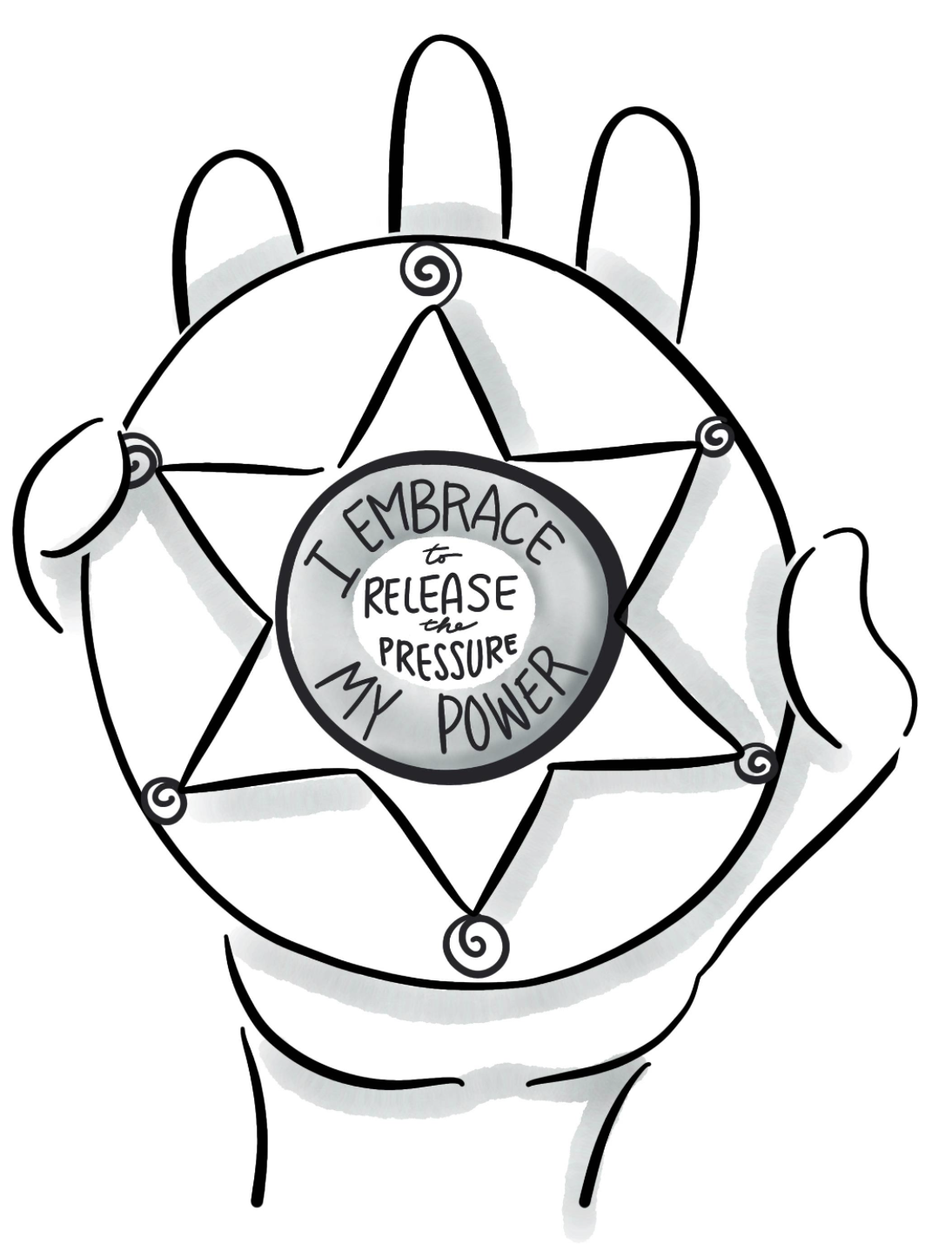
If you’d like some structure and support to work through your overwhelm, you’re invited to join us in the in-depth Pressure Inventory + Release Process in the Fall Power Pause. We’ll “get it out and get it down”, and then walk you through an empowering step-by-step process to assess and alleviate each pressure point you’re dealing with.
Hope to see you there!